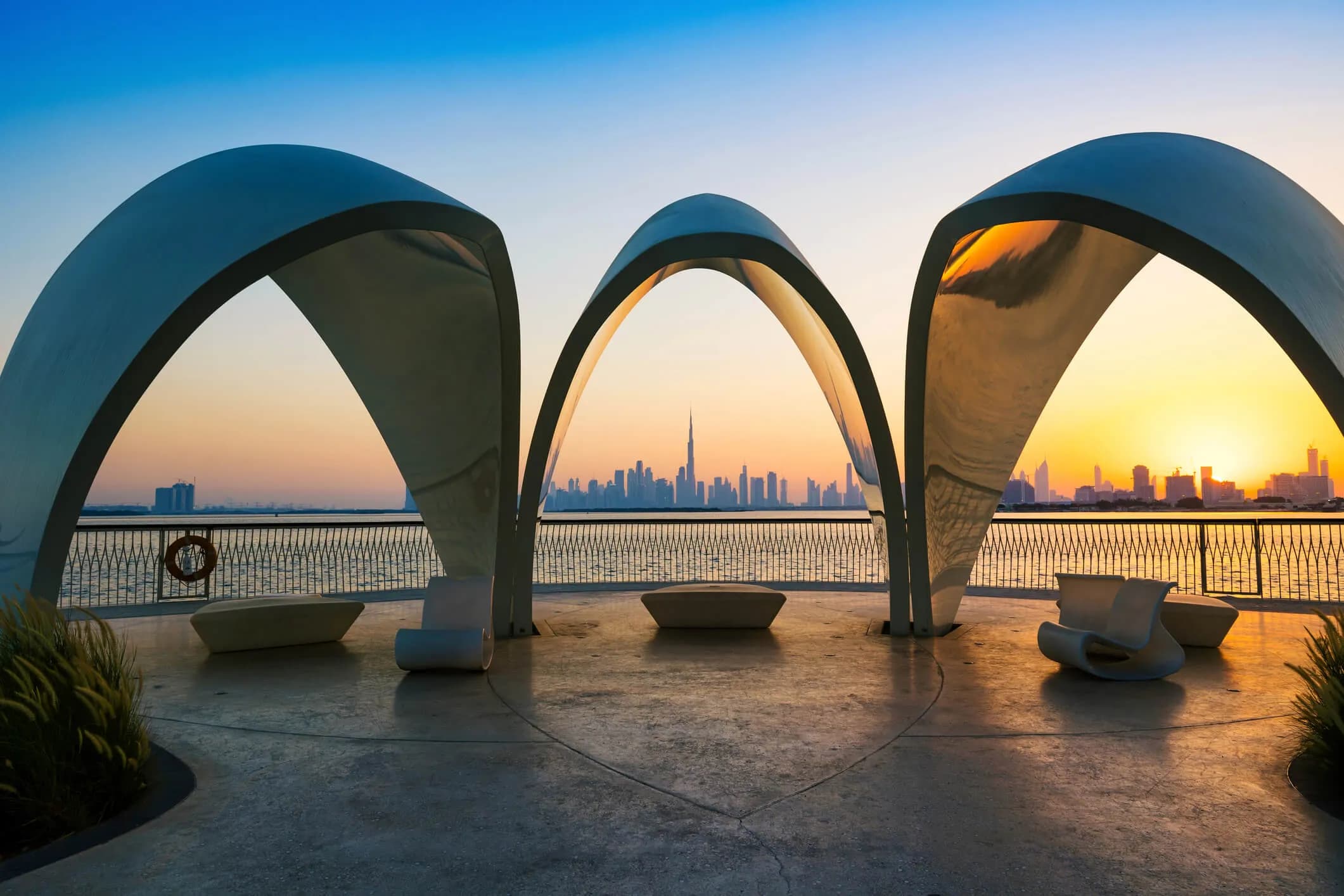
Long before Dubai became famous for its skyscrapers, Dubai Creek was the heart of the city's trading activity. Today, this historic waterway is one of the best places to experience Old Dubai, with traditional souks, wooden boats, heritage neighbourhoods and waterfront cafés. Whether you're visiting for a few hours or spending the day exploring, this guide covers the best things to do around Dubai Creek, practical tips and where to stay nearby, including the modern waterfront district of Dubai Creek Harbour.
Where Is Dubai Creek?
Dubai Creek is a historic saltwater inlet that cuts through the older part of the city. Deira sits on the Northern side and Bur Dubai on the South, and visitors cross between them by abra, a traditional wooden boat. Most of the sights in this guide, including the souks, Al Fahidi and Al Seef, sit along or near these two banks.
Dubai Creek and Dubai Creek Harbour are not the same place. While Dubai Creek is associated with the city's historic trading districts, Dubai Creek Harbour is a separate, modern waterfront development further along the waterway.
A Brief History of Dubai Creek
Long before the skyscrapers and malls, the Creek was the city's lifeline. It served as a natural harbour, drawing traders from India, East Africa and Persia. Traditional wooden dhows still dock along it's banks today, continuing the trade that shaped Dubai's growth, which is why a walk along the water still feels so different from the modern skyline. It's two banks, Deira and Bur Dubai, grew up as the city's first commercial districts, and they still carry that character in their markets, lanes and waterfront.
The Best Things to Do Around Dubai Creek
From historic streets and traditional markets to boat rides and waterfront dining, several of Dubai Creek's main attractions can easily be combined into one outing.
Cross the Creek by Abra
An abra (the word means "to cross" in Arabic) is a traditional wooden boat that carries passengers across the water in a few minutes. The crossing is a core part of a Creek visit, and the most popular route runs between the Dubai Old Souk and Al Sabkha stations, with another between Bur Dubai and the Deira Old Souk. The fare on a traditional abra is typically around AED 1 per person, paid to the driver, though some newer or air-conditioned boats charge more. Check current routes and fares on the RTA website before you go. Heritage-style abra routes linking Al Seef, Al Fahidi and the Old Souq have also been reported, and you can hire an abra privately for a longer trip along the Creek. Ask at a station or check with RTA for current options.
Explore the Gold and Spice Souks in Deira
Once you land on the Deira side, you are steps from two of Dubai's best-known markets. The Gold Souk is a maze of jewellery shops with glittering window displays, and the Spice Souk is a fragrant lane of stalls selling saffron, dried herbs, incense and tea. Both pair naturally with the abra crossing, and you can enjoy them without buying anything. The atmosphere is the point.
Walk through Al Fahidi and Al Seef
These two neighbourhoods are close together but feel different. Al Fahidi Historical Neighbourhood is the historic area, with narrow lanes, wind towers and traditional architecture, along with galleries, small museums and cafés. Al Seef is a newer waterfront destination with heritage-inspired design, shops and places to eat. Visit them together: wander Al Fahidi first, then finish with a stroll and a meal along the water at Al Seef.
Stop for food or coffee by the Creek
There are several inviting places to take a break while exploring Dubai Creek:
Arabian Tea House in Al Fahidi is a popular choice for breakfast or lunch, with a traditional courtyard setting and Emirati-inspired dishes.
For waterfront dining, Al Seef has a selection of restaurants and cafés overlooking the Creek, making it a pleasant place to relax after sightseeing.
On the Deira side, the area around Dubai Creek Golf & Yacht Club offers another dining experience, with waterfront restaurants and views towards the marina. The club is also home to an 18-hole championship golf course and a distinctive sail-shaped clubhouse.
For more recommendations, explore our guide to where to eat in Dubai.
Consider a Dhow cruise at Sunset
A dhow cruise is an optional way to end a day in historic Dubai. It differs from the short public abra crossing: it's a longer sightseeing or dining experience that you book separately. From the water you'll see the Creek's banks and city lights, but check the route with the operator before expecting specific landmarks. Dinner, music or other extras are offered by some operators and not others, so confirm what's included and where the boat departs from before you book.
How to Spend Half a Day at Dubai Creek
If you're visiting for the first time, this simple route combines the area's main highlights without unnecessary travelling.
Al Fahidi - Explore the historic streets and cafés, approximately 1-1.5 hours
Abra crossing - Take a traditional boat to Deira, approximately, 15-30 minutes, including waiting
Gold and Spice Souks - Browse the traditional markets, approximately 1-1.5 hours
Al Seef - Return for lunch or a waterfront stroll, approximately 1 hour
Allow approximately four to five hours, depending on your pace.
During warmer months, start early to avoid the midday heat. If you have more time, consider extending your visit with dinner or an evening dhow cruise.
Is Dubai Creek a Good Place to Stay?
Dubai Creek is a good area to stay if you're interested in history, culture and waterfront experiences. However, the best location depends on whether you prefer being close to Old Dubai's attractions or staying in a more modern neighbourhood.
Deira or Bur Dubai: Stay Near the Historic Creek
Deira and Bur Dubai suit travellers who want easy access to the souks, traditional abra crossings and historic neighbourhoods.
These areas are generally busier and more traditional than Dubai's newer districts, but they're excellent for visitors interested in culture and exploring on foot.
Dubai Creek Harbour: A Modern Waterfront Base
For a quieter, more contemporary setting, Dubai Creek Harbour is worth considering. Located further along the waterway, this modern district offers waterfront promenades, restaurants and views towards Dubai's skyline. It's also home to Creek Beach, an appealing spot for relaxing by the water.
Luxe City Rental offers two apartments in the area, each suited to a different experience. The Creek Palace apartment is ideal for visitors who enjoy waterfront walks and dining, while the Vida apartment at Creek Beach suits those looking for a more relaxed, beach-focused stay.
Keep in mind that Dubai Creek Harbour is separate from the historic Creek attractions, which require a taxi or car journey to reach.
What about Dubai Creek Tower? Dubai Creek Tower is a planned landmark within the development. It is not currently open to visitors, so check Emaar's official updates for the latest information.
Downtown Dubai: A Base for Wider Sightseeing
Downtown Dubai is another option if you want to combine visits to the Creek with major attractions such as Burj Khalifa and Dubai Mall.
It offers a busier atmosphere and plenty of restaurants, making it a convenient base for travellers planning to explore different parts of the city.
Practical Tips for Visiting Dubai Creek
A little planning will help you make the most of your visit:
- Walk in the cooler hours: Much of the Creek experience is outdoors, so go in the morning or late afternoon, especially from late spring to autumn. Bring water and a hat.
- Check abra routes and fares: Routes and prices can change, so confirm them with RTA, and carry a little cash for the driver.
- Confirm opening hours: Check attractions, museums and restaurants before you set out, and allow time to explore on foot.
- Wear comfortable shoes: The souks and heritage lanes involve a lot of walking, and the ground can be uneven in older areas.
- Be relaxed about bargaining: Polite negotiation is common at spice and souvenir stalls, but you don't have to buy anything to enjoy the atmosphere.
For more advice, read our Dubai travel guide.